By John Dylan Barker, Atlas High Performance Homes
Summary: Frost on the roofing nails or the underside of the roof sheathing means moisture is reaching the coldest surfaces in your attic. A light frost on the coldest nights can be normal, but heavy frost that keeps coming back usually means warm, moist air from the house is leaking into the attic. The lasting fix is to seal the ceiling and send every exhaust fan outdoors, not to add more roof vents.
The Problem: Frost Now, Dripping Later
In January or February, a homeowner finds white frost on the roofing nail tips or across the underside of the roof sheathing. On the first warm day it melts, drips onto the insulation and can stain the ceiling. It looks like a roof leak, but the water came from inside the house.
Is Some Frost in the Attic Normal?
A small amount can be. On clear winter nights a roof loses heat to the sky, and the sheathing can get colder than the outdoor air. Canadian attic research summarized by Don Fugler of Canada Mortgage and Housing Corporation found that this causes occasional frost. Sheathing moisture rose through the winter and fell to near 10% by April or May, though some sheathing measured above 60% moisture content in midwinter (Fugler, 1999).
How long the wood stays wet matters most. Kohta Ueno of Building Science Corporation (BSC) lists optimum mold growth at 25% to 30% wood moisture content and decay fungi above 28% (Ueno, 2023). Forest Products Laboratory researchers found that where winter condensation did cause widespread decay, the assemblies could not dry quickly and stayed wet into late spring (Carll and Highley, 1999).
Frost on a few nails after the coldest nights is not an emergency. Frost that builds up through the winter, drips, or leaves dark spots on the sheathing is a sign to find the source.
The Cause: House Air Reaching a Cold Roof
Condensation needs "water vapor in the air and a surface cold enough," as Allison Bailes explains in Why Is There Frost in the Attic? Indoor air carries moisture from showers, cooking and people; a vented attic should hold only outdoor air. In BSD-102, Joseph Lstiburek writes that vented attics "should not communicate with the conditioned space – they should be coupled to the exterior." When the ceiling leaks, the stack effect pushes warm house air into the attic all winter.
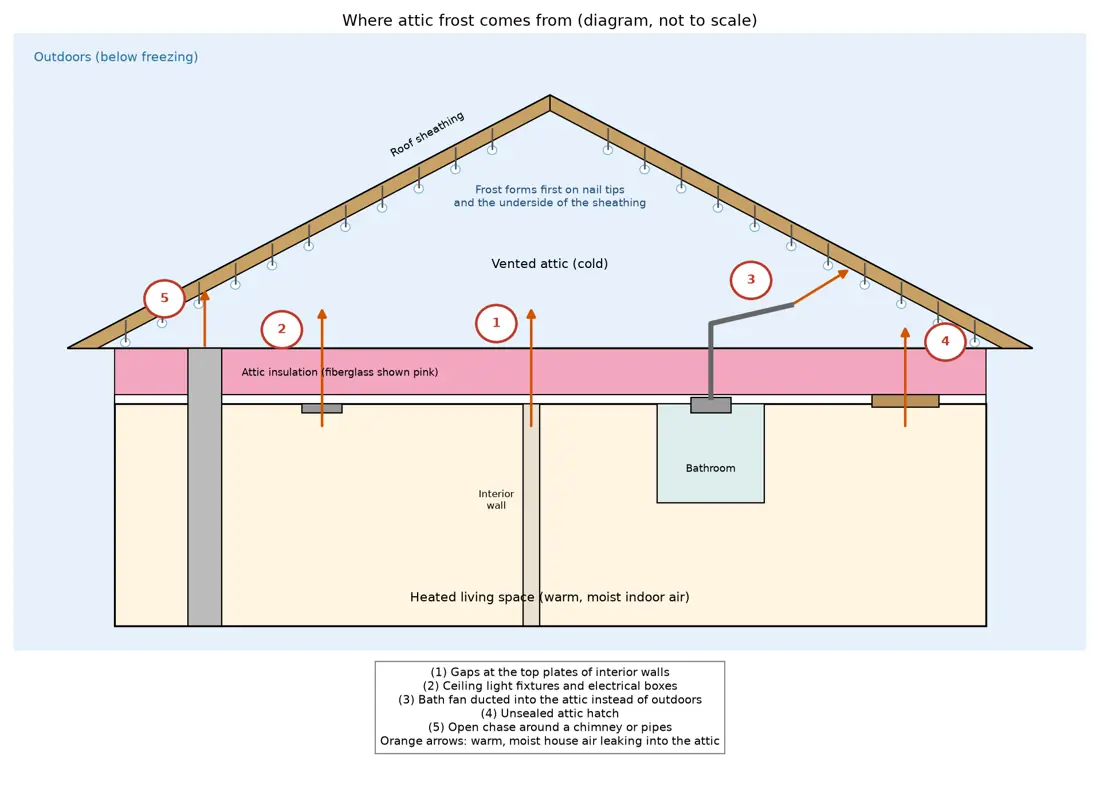
The paths I find most often:
- Top plates of interior walls. Bailes notes that this gap at the ceiling drywall "runs for hundreds of feet throughout the attic."
- Light fixtures, electrical boxes and wiring holes. Lstiburek's Builder's Guide to Cold Climates advises against recessed lights in insulated ceilings unless they are airtight (p. 426).
- Bath fans that end in the attic. The 2024 International Residential Code, which New Hampshire uses, states: "Air shall not be exhausted into an attic, soffit, ridge vent or crawl space" (M1501.1). The Department of Energy's Building America Solution Center warns that moist air from these ducts "can condense on cold rafters, trusses, and sheathing" (Exhaust Fans). New Hampshire adopted the 2024 IRC effective July 1, 2026 (HB 1159); either the 2021 or 2024 edition may be used for permits through Dec 31, 2026, and the 2024 edition is required from Jan 1, 2027. Energy rules remain the 2018 IECC with NH amendments.
- Attic hatches and chases around chimneys and plumbing vents, plus leaky ductwork in the attic (guide, p. 217).
High indoor humidity makes every leak worse. The guide puts typical winter indoor humidity at 20% to 30% (p. 129); a humidifier set well above that sends more water into the attic.
Why More Roof Vents Usually Don't Fix It
Fugler's review concluded that "ventilation plays a relatively small part in the control of attic moisture," and that reducing "heat and moisture flows from the house to the attic" is the prudent fix. Ueno calls vented attics the best choice but adds that "air sealing at ceiling [is] critical for best performance" (Ueno, 2020). Ventilation still matters: the guide gives typical practice as 1 square foot of vent area per 300 square feet of ceiling, and says venting works best with about half near the ridge and half near the eaves (p. 433).
What the Frost Pattern Tells You
| What you see | Most likely cause | What to check |
|---|---|---|
| Heavy frost in one area | A leak or fan duct below it | Fan ducts, fixtures and chases under that spot |
| Frost over most of the roof deck | Widespread ceiling leakage, high indoor humidity, or both | Blower door test, indoor humidity |
| Ceiling stains after a thaw | Frost melting and dripping | The attic above the stain, before the roof |
| Dark spots on the sheathing | Repeated wetting, possible mold | Moisture meter readings |
How I Approach Attic Frost at Atlas
I find the leak before recommending any work. As a licensed New Hampshire home inspector, I start with a building science assessment that includes a blower door test and an infrared scan. Our crew then does the air sealing and attic insulation, and a second test shows whether the leakage went down.
The Solution: Fix It in This Order
1. Find the leaks. A blower door test with an infrared scan in cold weather shows them. The heaviest frost often sits right above one.
2. Send all exhaust outdoors. Every bath fan, kitchen fan and dryer duct should end outside, through a short, straight, insulated duct with a sealed connection, as the Solution Center recommends.
3. Seal the ceiling. Pull back the insulation and seal the top plates, wiring and plumbing holes, fixtures and fan housings. Weatherstrip and insulate the hatch. Close chases with rigid material, using noncombustible material at chimneys and flues. Air Sealing First explains why sealing comes before insulation.
4. Bring indoor humidity back to normal. Turn humidifiers down, run bath fans during and after showers, and check for a wet basement adding moisture.
5. Insulate and check ventilation last. Add insulation to the level the house needs, install baffles at the eaves and confirm the soffit and ridge vents are open.
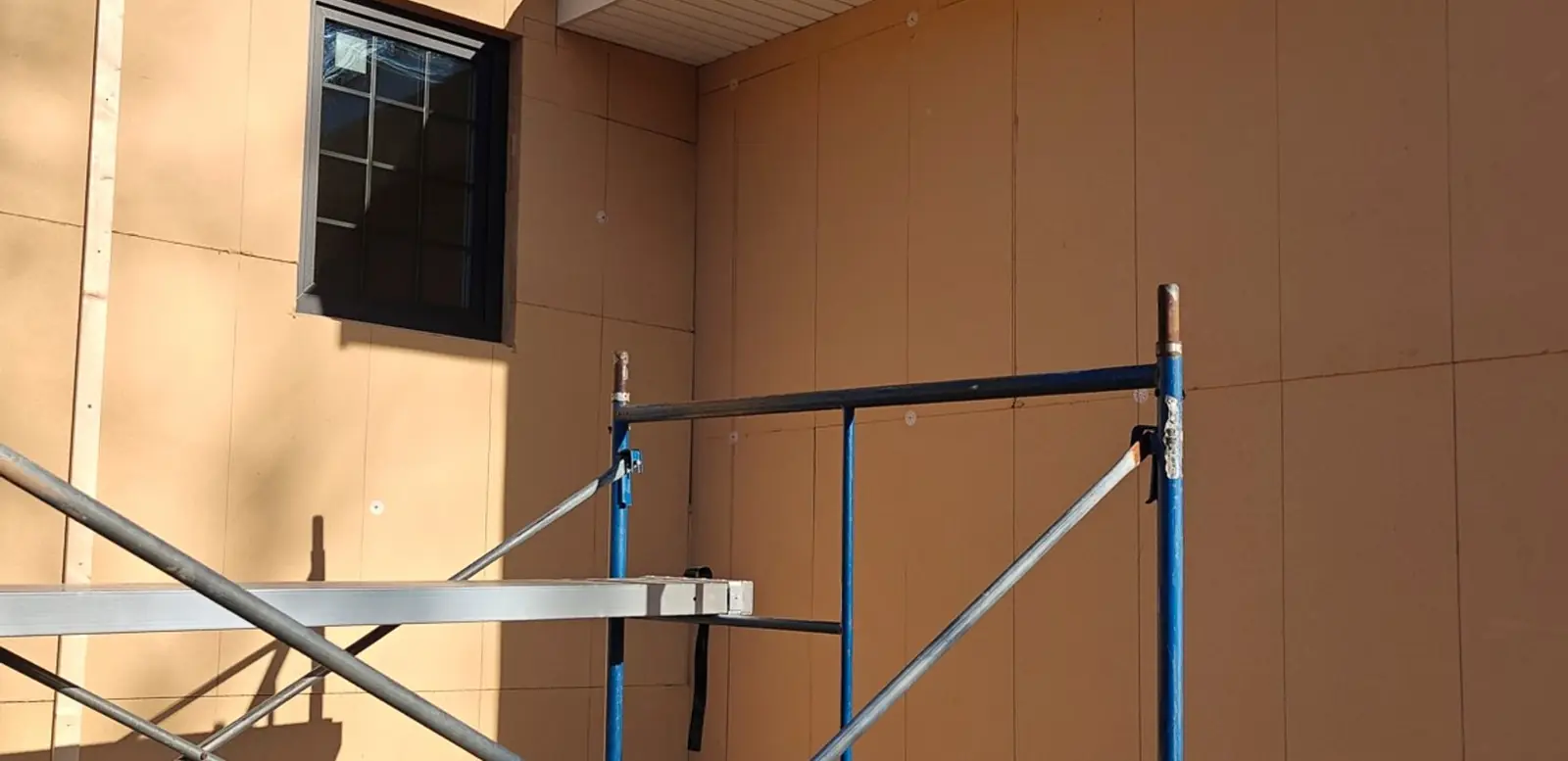
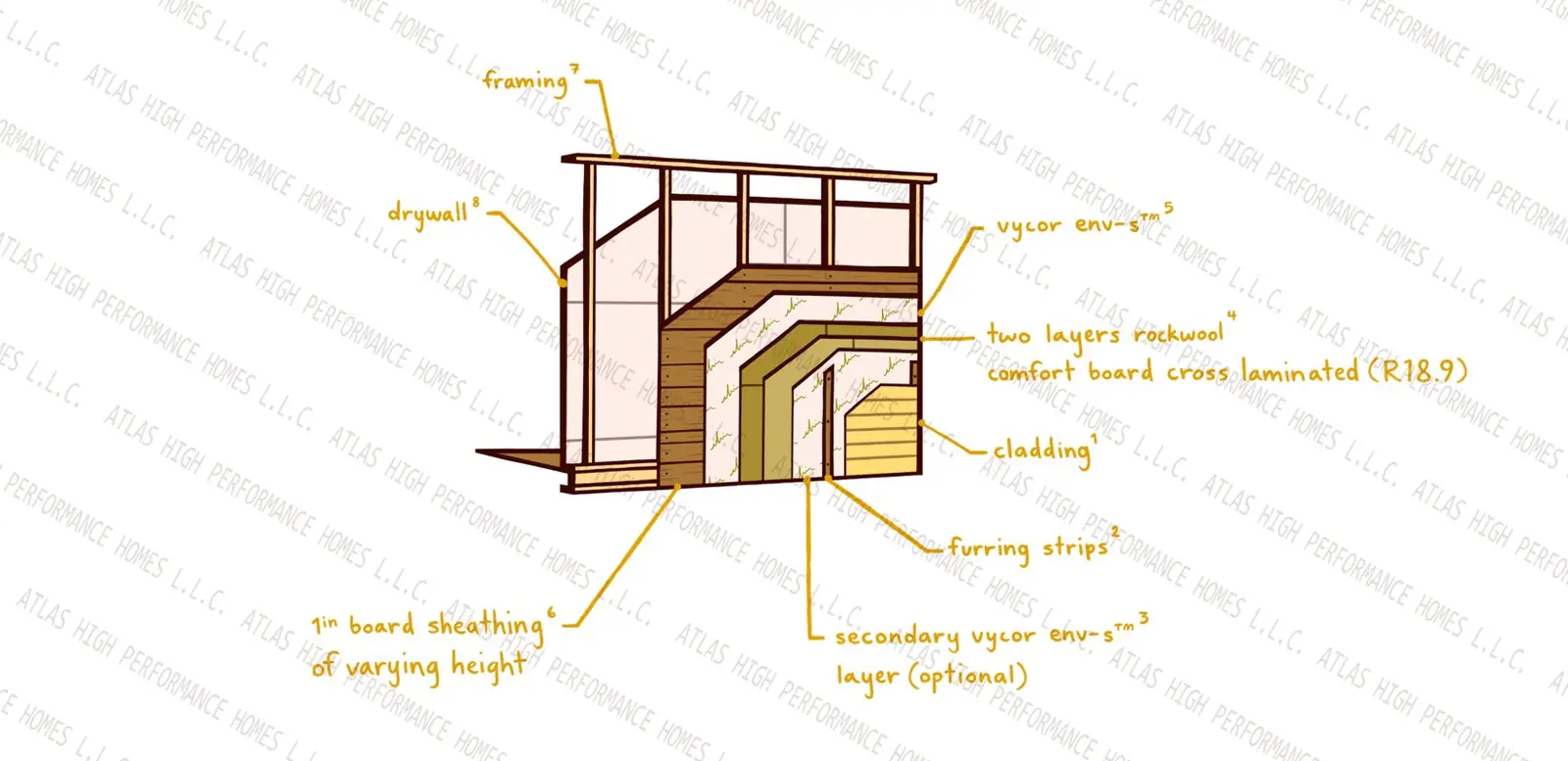
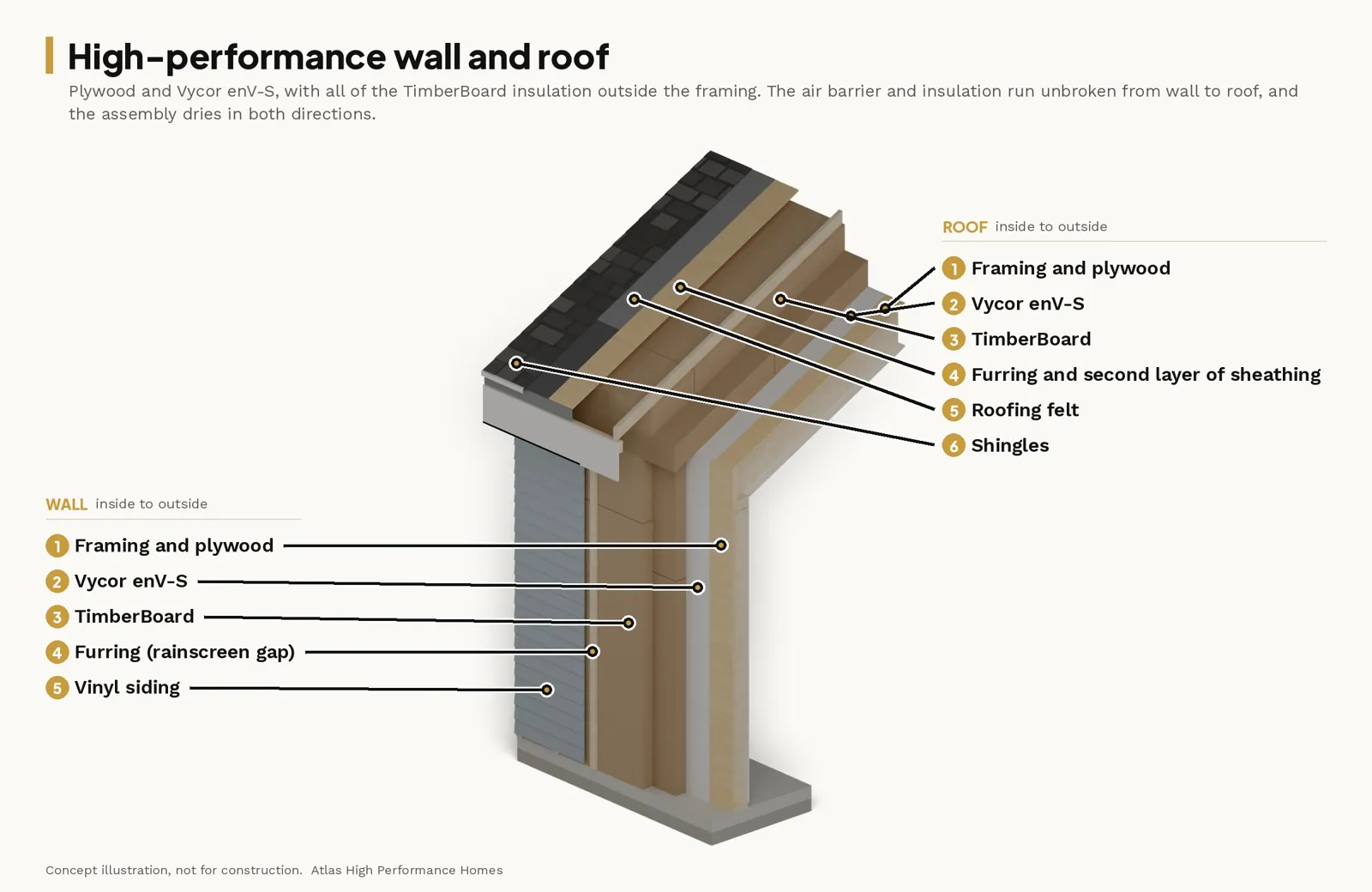
6. Consider the roof when it is due for replacement. For a vaulted ceiling, or a roof being replaced anyway, the air barrier and insulation can move above the roof deck, which keeps the deck warm (BSD-102). Our high-performance roofs use plywood covered with Vycor enV-S as the air barrier, TimberBoard wood-fiber insulation above it and a vented over-roof. This costs more than sealing the attic floor; I compare the two in High-Performance vs. Standard Construction in New Hampshire.
Note: After air sealing, fuel-burning appliances should be checked to confirm they still vent properly, because the guide states that "spillage or backdrafting of combustion appliances is unacceptable" (p. 409). A much tighter house may need mechanical ventilation, covered in Air Sealing First. Sheathing that already shows mold or soft spots should be assessed before the attic is insulated again.
Next Step
Reach out if you've found frost in your attic this winter and want to know where it's coming from!
Atlas High Performance Homes
Phone: (603) 688-6096
Email: AtlasRemodelingNH@gmail.com
Sources
- Lstiburek, J. Builder's Guide to Cold Climates. Building Science Corporation, 2022, pp. 129, 217, 409, 426, 433.
- Lstiburek, J. BSD-102: Understanding Attic Ventilation. Building Science Corporation, 2006.
- Ueno, K. How Do We Really Even Know What We Know? Building Science Corporation, 2023 (moisture thresholds slide).
- Ueno, K. Unvented Roofs presentation, Home Performance Coalition. Building Science Corporation, 2020.
- Fugler, D. Conclusions from Ten Years of Canadian Attic Research. ASHRAE Transactions, 1999.
- Carll, C. and Highley, T. Decay of Wood and Wood-Based Products Above Ground in Buildings. Journal of Testing and Evaluation, 1999.
- Bailes, A. Why Is There Frost in the Attic? GreenBuildingAdvisor.
- International Code Council. 2024 International Residential Code, Section M1501.1.
- Building America Solution Center (U.S. DOE / PNNL). Look at Exhaust Fans for Venting to Outside.